
Winter Is Coming: Why Color PPF Is a Smart Defense Against Salt, Ice & Road Grime
Winter is hard on paint. Every commute through slush coats the lower half of your car in salt brine, sand, and grit, and every pass of the highway throws a little more at the front end. If you've been thinking about a new color anyway, there's a way to handle both at once: color PPF.
Here's what winter does to your car's exterior, how color paint protection film helps on the panels it covers, and how to care for it until spring.
What winter driving does to your paint
Snow itself isn't the problem. It's what rides along with it:
- Road salt and brine. Treated roads leave a salty film that clings to lower doors, rockers, bumpers, and wheels, and it builds up every time you drive.
- Sand and grit. Plows and spreaders put abrasive material on the road. Tires throw it at the car, and wiping it off dry drags it across the surface.
- Slush and dirty snow. Wet buildup holds that grime against the finish for days at a time.
- Rock chips. Gravel and debris hit the hood, bumper, and mirrors harder at highway speed.
None of this happens in one drive. It's the repeat exposure, week after week, that wears on a finish.
What color PPF does
Color PPF is a colored paint protection film applied over your car's painted panels. It changes the color or finish of the car, and it adds a physical layer between the paint and the road. (New to the topic? Start with What Is Color PPF?)
Think of it as a sacrificial layer. Grit, chips, and wash marks hit the film first instead of the factory paint underneath. Peak PPF is made from thermoplastic polyurethane (TPU) at 7.5 mil or thicker, with USA-made resins, so there's real material there to absorb everyday road wear.
Two things to keep in mind:
- It protects what it covers. Film on the doors and bumpers helps those panels. Wheels, wheel wells, the undercarriage, and anything left unwrapped still take the full hit.
- It reduces wear; it doesn't make a car invincible. A big enough rock can still damage film, and a damaged section can be replaced by your installer.
About self-healing: Peak PPF has a self-healing top coat, so light swirls and minor surface marks from washing fade with heat, from the sun or warm water. That's for small surface marks. Deep scratches, cuts, and chips that go through the film don't repair themselves.
Protection and a new look, in one install

Clear PPF protects your paint and keeps the color you already have. Color PPF does the same job and lets you pick something new. That means you don't have to choose between keeping the car safe this winter and finally getting the color you've wanted.
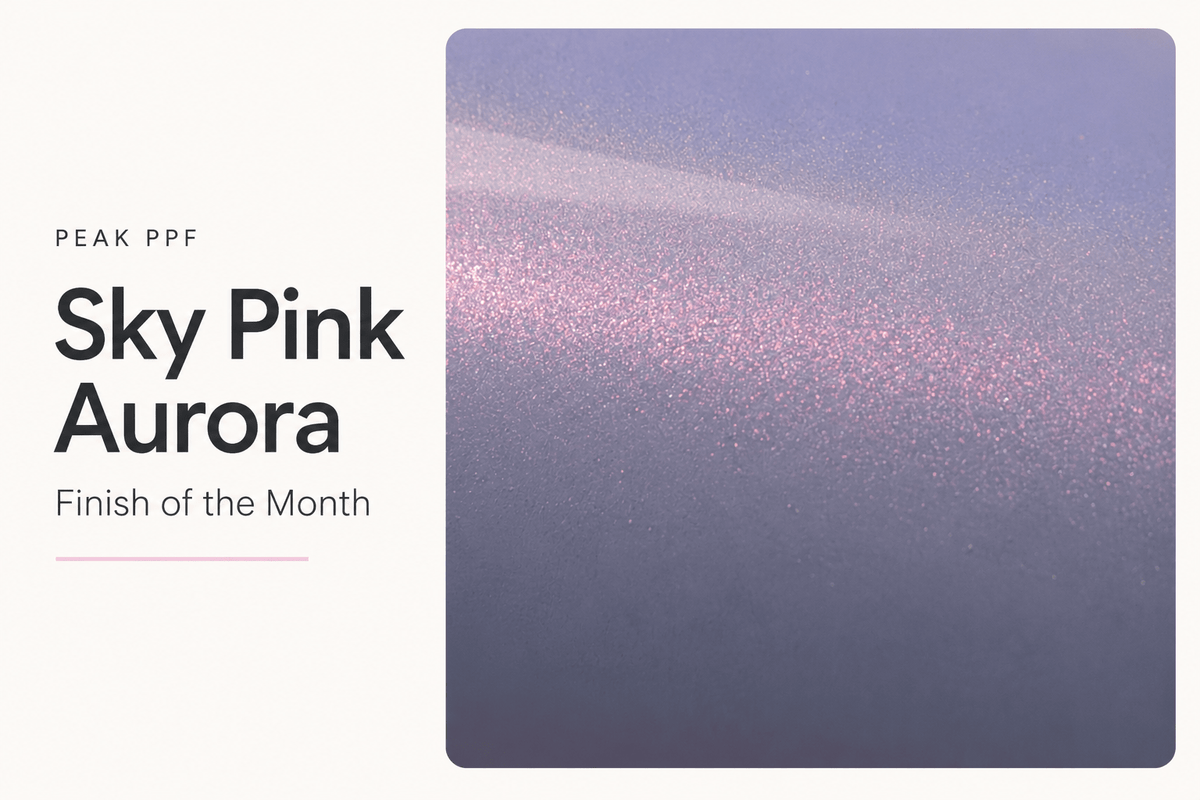
Peak PPF offers 110 colors across gloss, Frozen (matte and satin), metallic, carbon, and Aurora color-shift finishes. A few that wear well year-round:
- Earth tones and neutrals like Armor Sand and Fog Green, which look right on SUVs and trucks in any season.
- Grays and silvers, which are forgiving between washes. Browse The Grays.
- Something bold, like Space Ghost Purple, for a car that stands out against a gray winter sky.
Want to see it on your car first? Try the 3D Visualizer or browse every color.
Comparing options? Color PPF is thicker than vinyl wrap and built to protect, not just restyle. Here's the full breakdown: Color PPF vs. Vinyl Wrap.
Winter care for color PPF

Film makes winter easier on your paint. It doesn't replace washing. A few habits go a long way:
- Rinse salt off promptly. Don't let brine and grime sit for weeks. A rinse after a salty stretch of driving keeps buildup from baking onto the surface.
- Hand wash when you can. Use a pH-neutral car shampoo, a soft mitt, and microfiber towels. Rinse first so grit isn't dragged across the film.
- Skip brush-style automatic washes. Brushes can scratch or lift the film. Touchless or hand washing is the way to go.
- Keep pressure washer spray off the edges. If you use one, stay at a safe distance and don't aim directly at film edges.
- Don't scrape the film. Brush snow off the paint gently and save the ice scraper for the glass.
- Keep cleaning the parts film doesn't cover. Wheels, wheel wells, and especially the undercarriage still need regular salt removal.
- Consider a ceramic coating. Peak PPF is compatible with ceramic coatings, which help salt and grime rinse off faster. On Frozen matte and satin finishes, use products made for matte surfaces only.
Just had film installed? Wait about 7 days before the first wash so the adhesive can fully bond. For more, see How Long Does Color PPF Last? and the full Care Guide.
Plan ahead: book before the weather turns
A full color change typically takes 2 to 5 shop days, depending on the vehicle and how many panels need to come off. Shops get busy before winter, so book early. When you talk to your installer, ask:
- Which panels make sense to cover for how you drive
- Whether your paint needs correction before the film goes on
- How long to wait before the first wash
Every Peak PPF install is backed by a 10-year limited warranty against manufacturing defects when installed by an authorized Peak PPF installer.
Color PPF in winter: quick answers
Is color PPF good for winter driving?
Yes. Color PPF adds a protective layer to the painted panels it covers, which helps against road salt, grime, grit, and rock chips. It still needs regular washing, and areas without film need the usual care.
Does color PPF stop rust?
Not on its own. It helps protect the painted surfaces it covers, but it doesn't treat or protect the undercarriage, wheel wells, or areas left uncovered. Keep washing salt from those areas all winter.
Can I take a car with color PPF through a car wash?
Avoid brush-style automatic washes, which can scratch or lift the film. Hand washing or a touchless wash is the safer choice.
Can I install color PPF in winter?
Yes. Installs happen indoors at the shop. Just plan around the 2 to 5 day install time and the week-long wait before the first wash.
Get winter-ready with Peak PPF
Winter doesn't have to mean a dull, beat-up finish. Pick a color, protect the panels that take the most abuse, and roll into spring looking better than you did in fall. Find a Peak PPF installer near you to talk coverage and colors before the first storm.